Kimberling City & Table Rock Lake
Motors, cables, electrical, hydraulics, and inspections. On Table Rock Lake, a lift that groans, leans, or will not come up is usually telling you something.
When a boat lift stops working, you need more than a quick guess about what went wrong. You need someone who understands the equipment, the waterfront conditions around Table Rock Lake, and the importance of getting the lift operating correctly again. That is the focus here for homeowners, waterfront properties, and boat owners throughout Kimberling City and nearby communities.
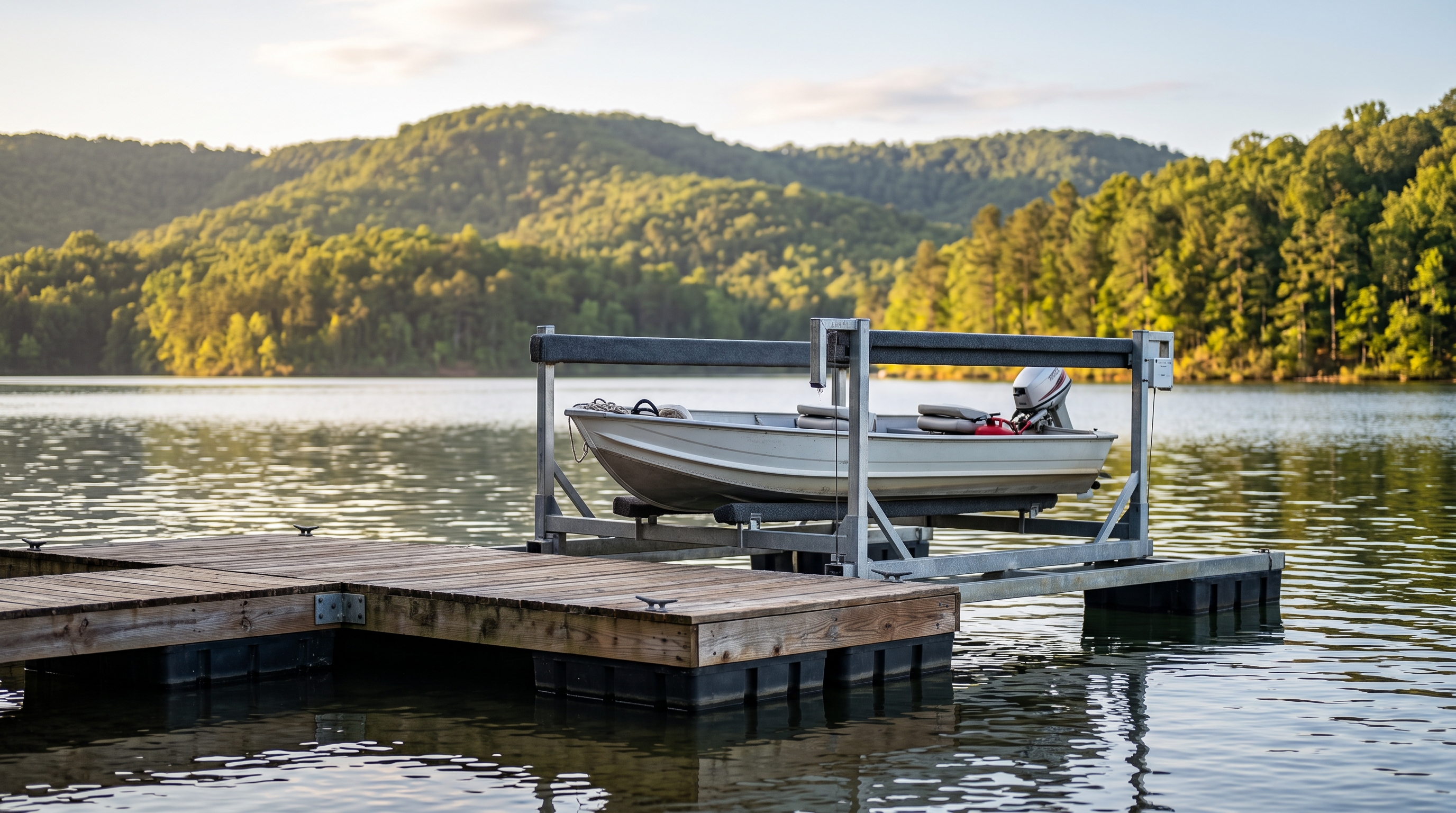
The four-post and elevator-style aluminum lifts, boathouse lifts, and jet ski lifts that are standard on Table Rock Lake include equipment from HydroHoist and ShoreStation, the two brands you’ll see most on the lake, ShoreMaster and Hewitt, as well as older or unbranded lifts put up by local dock builders. That means motors, cables, sheaves, gearboxes, electrical controls, and hydraulic equipment. Inspection and maintenance can catch worn parts and developing problems before they become a larger repair. If your lift is making unusual sounds, moving unevenly, refusing to raise or lower, or simply needs a professional look, we can help.
How It Works
No phone-tag, no pressure. Three steps from "something's wrong" to a working boat lift.
Call or send the form. Describe the sounds, the movement, or when the lift stopped working. Photos help.
A noisy gearbox is not the same job as a dock GFCI that keeps tripping, and the right person for one is not always the right person for the other. From working with boat owners around Table Rock Lake, we match your symptoms, your location, and your type of lift with an independent licensed marine contractor who handles that kind of work. They contact you, look at the lift, and tell you in plain language what they find.
The price, the agreement, and the warranty are between you and that contractor. If you go ahead, they do the work. If you would rather get a second opinion first, that is a reasonable thing to do.
Table Rock Boat Lift Repair is built on a simple idea: boat lift owners should get clear answers without being pushed toward unnecessary work. Humidity, winter freeze-thaw, and constant use turn small issues into expensive ones, so the focus here is narrow — boat lifts, and the motors, cables, electrical, and hydraulics that run them.
Every lift is treated as a working piece of waterfront equipment, not just another service call. The contractors we work with inspect what they can, explain what they find, and recommend repairs based on the condition of the lift.
More about usThese cover the most common mechanical, electrical, and hydraulic problems that affect boat lifts.
Troubleshooting and repair for lift motors that are slow, noisy, intermittent, or not running at all.
Learn more →Inspection and repair for cables that are worn, frayed, corroded, or pulling unevenly.
Learn more →Diagnosis and repair for controls, switches, connections, and wiring problems.
Learn more →Repair for leaks, weak lifting, and inconsistent movement on hydraulic lifts.
Learn more →Routine checks that catch wear, corrosion, and developing problems early.
Learn more →Coverage includes Kimberling City along with Shell Knob, Branson West, Reeds Spring, Cape Fair, Lampe, Blue Eye, and Golden. Waterfront conditions vary from property to property, so every service call comes down to the specific lift, its environment, and the symptoms you are seeing.
If your lift is not operating normally, do not wait for a small problem to become a major one. Tell us what is happening and we can discuss the next step.
See all service areasThis site covers boat lift repair rather than trying to be everything to everyone. The contractors on the other end of it work on the equipment at your dock every day.
You should get it in plain language, with an immediate repair distinguished from routine maintenance and from an issue that just needs monitoring.
Lake conditions are still hard on hardware: stainless lift cable here typically lasts longer than in saltwater environments, but winter ice, water-level swings, and years of use still wear it down; dock GFCI outlets corrode and trip, and moisture works into motor windings and control boxes. Local conditions wear on a lift in specific and predictable ways.
A lift problem can involve more than the part that first appears to be failing. Related components are worth looking at before anything gets replaced.
A boat lift is part of your home, not just equipment. Whoever we send should work carefully and keep you informed throughout.
What to Expect
It is the focus here — not a sideline to dock building or boat detailing.
You should be told what needs fixing now, what can wait, and what to just keep an eye on.
From winter ice to a hard spring storm season, Table Rock Lake conditions wear on a lift in ways that take local experience to spot.
Working carefully around your home, cleaning up, and keeping you in the loop is the baseline. Tell us if it does not happen.
Usually a dry or failing pulley (sheave) bearing, a worn gearbox, or a cable starting to slip on its drum. Stop using the lift if the noise is severe, especially with a boat on it, and have it inspected before a pulley or cable lets go under load.
For a lift used through a full season, once a year is a reasonable baseline. Lifts on open water on the upper James River arm, or under heavy use, often benefit from a look every six months.
Often not. On direct-drive lifts a failed starting capacitor is the most common cause and an inexpensive fix. A seized gearbox or pulley, water in the motor, or low voltage at the dock outlet can cause the same symptom, so testing comes before replacing.
The aluminum four-post and elevator lifts common here, including HydroHoist and ShoreStation, the two brands you’ll see most on the lake, ShoreMaster and Hewitt, plus older or unbranded lifts. Most parts are interchangeable across brands.
Yes. Coverage includes Kimberling City and surrounding Table Rock Lake communities: Shell Knob, Branson West, Reeds Spring, Cape Fair, Lampe, Blue Eye, and Golden.
A boat lift problem does not always get better on its own. Tell us what your lift is doing and let us help you determine the next step.
Free — no obligations