Boat Lift Cable Repair
Boat Lift Cable Repair in Kimberling City
Concerned about a worn lift cable?
Boat Lift Cable Repair
Concerned about a worn lift cable?
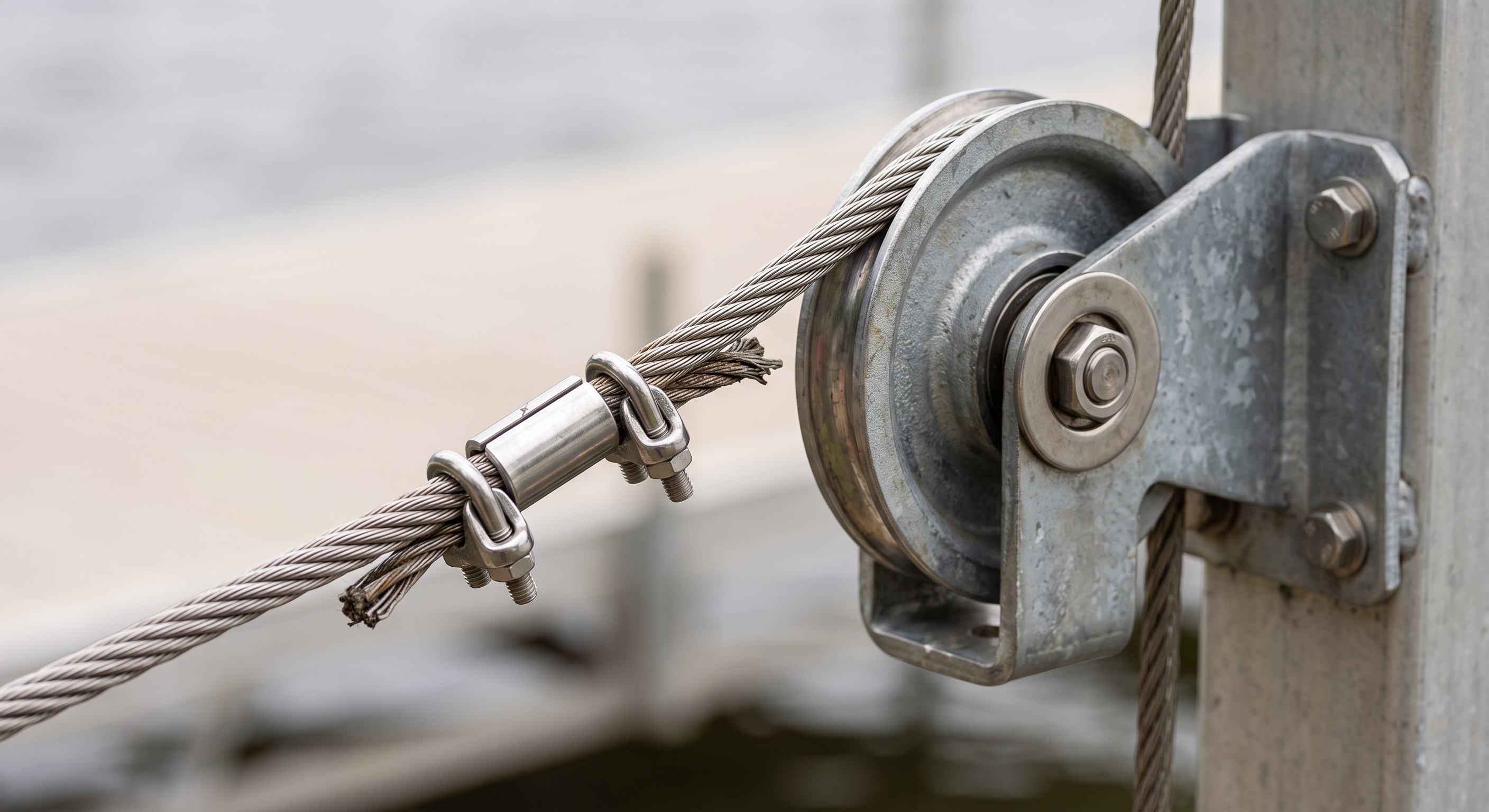
Boat lift cables carry an important part of the lifting load, so visible wear, corrosion, fraying, kinking, or uneven movement deserves attention. A cable problem can also affect how the lift moves and place additional stress on other components.
Most lifts around Kimberling City and Shell Knob run 7×19 stainless or galvanized aircraft cable, and with lake-level swings and winter exposure it often reaches the end of its service life in about four to six years. A proper cable inspection covers the sheaves (pulleys), their bearings, and the drum or flat-plate drive, not just the cable itself, since a seized pulley will chew through a new cable quickly. When replacement is the right call, cables are changed as a matched set and the contractor explains what they find.
Winter exposure, water-level swings, and a full season of use are hard on lift cable. Regular inspection helps identify wear before it becomes a more serious lift problem.
Moisture and winter freeze-thaw rust galvanized cable from the inside out and pit stainless at the drum and sheaves. Galvanized cable tends to go faster than 316 stainless in local water.
Even one or two broken wires (“fishhooks”) is a reason to stop and have the cable evaluated rather than continuing to run the lift.
A cable that has jumped a sheave or unwound at the drum is no longer running true and needs a closer look before it fails.
If one corner rises differently from the others, cables have usually stretched at different rates or one is slipping on the drum. Resetting tension evenly and checking the sheave bearings is the fix.
| Service | Estimated Cost | Average |
|---|---|---|
| Cable inspection | $100–$250 | $175 |
| Cable repair or adjustment | $200–$500 | $350 |
| Cable replacement work | $350–$1,000+ | $650 |
These are general planning estimates, not quotes. Actual cost depends on cable type, lift configuration, access, parts, condition, and the amount of work required.
Visible cable damage is a reason to assess the related components too, not to treat the cable on its own.
With the water level moving several feet between winter and summer pool around Kimberling City and Shell Knob, lift cable often reaches the end of its life in three to five years. The wear patterns differ between stainless and galvanized rope, and the sheaves and bearings that shorten cable life are worth checking at the same time.
The goal is to identify the actual condition of the lift and recommend the work that is appropriate for it.
If you see cable damage or your lift is moving unevenly, do not put off an inspection.
Free — no obligations
It starts with what you have noticed: fraying, corrosion, uneven lifting, or unusual movement.
The contractor examines the cable and related components for visible wear, damage, and alignment concerns.
You are told whether adjustment, repair, replacement, or additional inspection is appropriate.
After the work is completed, the contractor should run the lift through a full cycle before leaving.